
Oil Chillers / Fluid Chillers
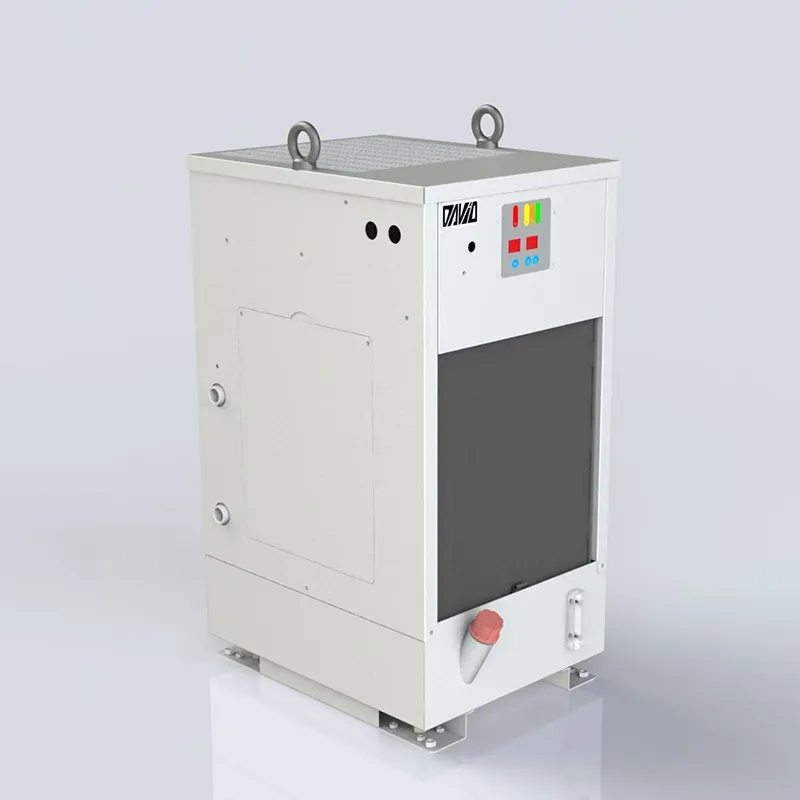
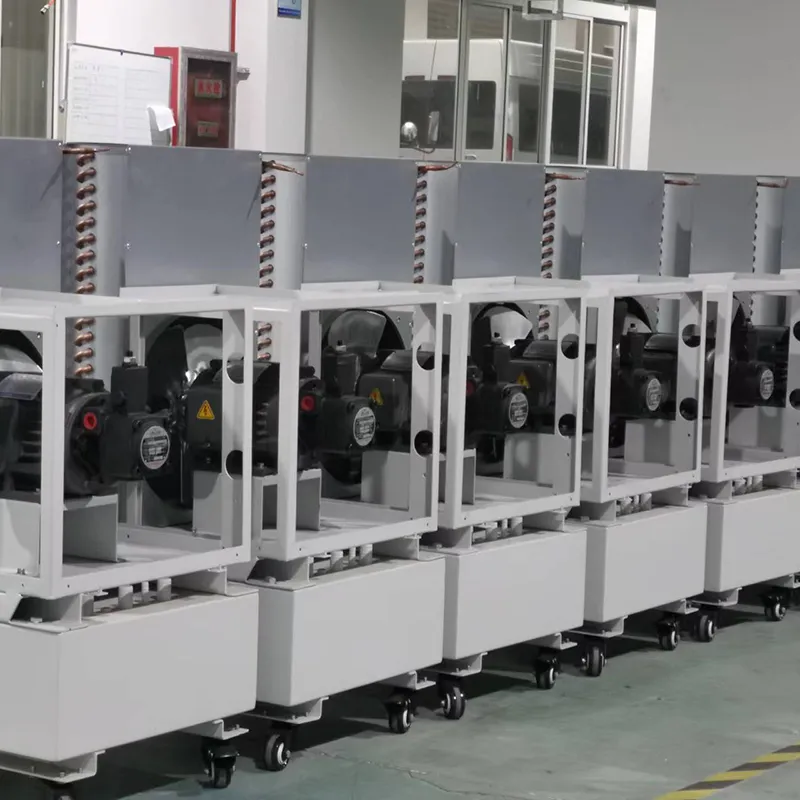
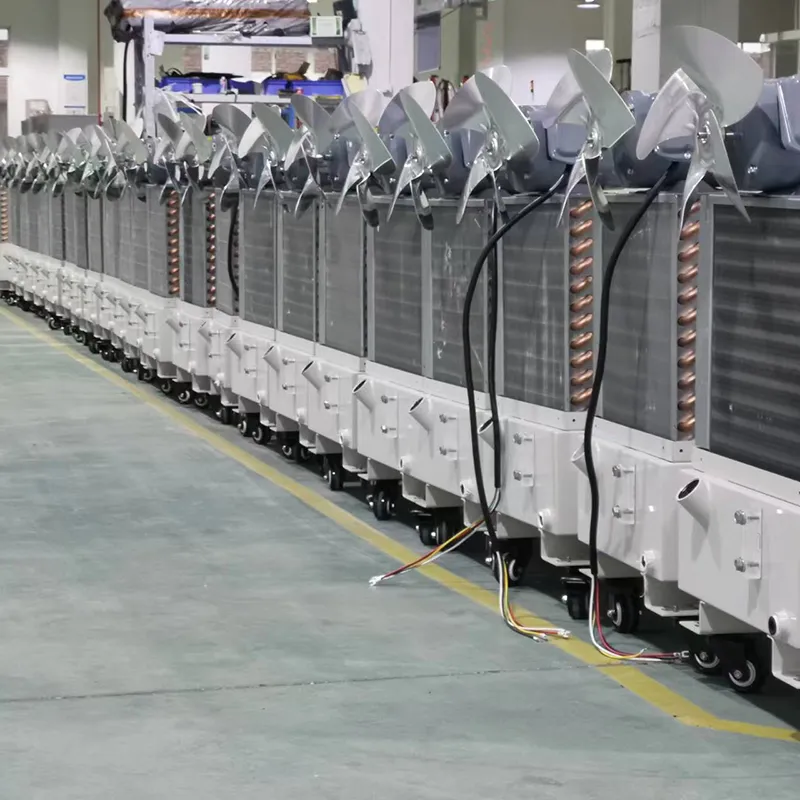
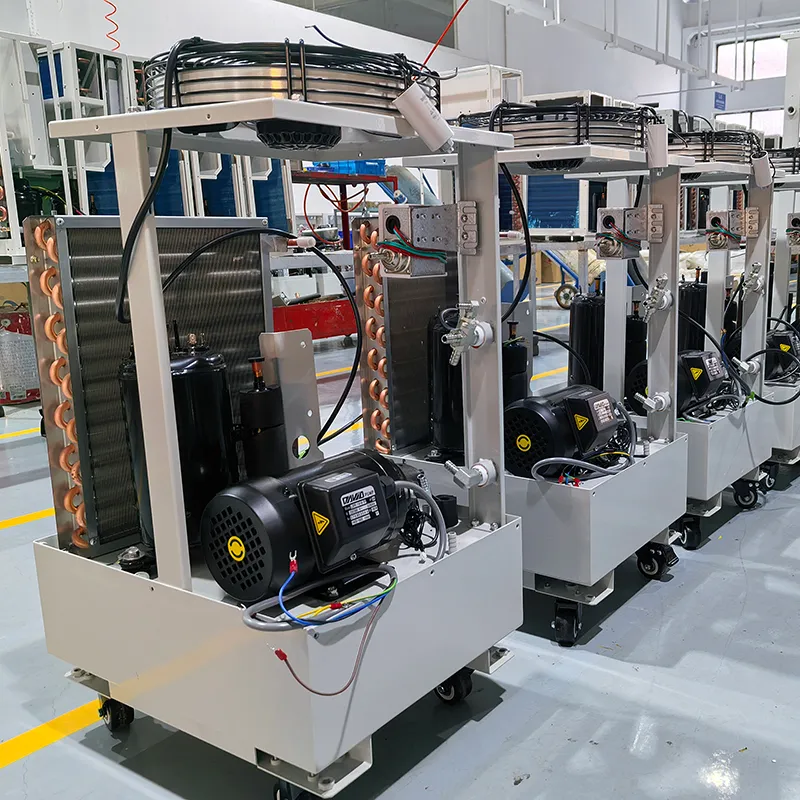
- Cooling Capacity: 0.5-110kW
- Rated Power: 600~6200 W
- Control accuracy: ±1.5℃
- Pump Flow Rate: 3 ~ 60 L/min
- Outlet Pressure: 0.4 ~ 1.5 Mpa
Applications
- Metal cutting equipment such as CNC machines, machining centers, lathes, milling machines, grinders, broaching machines and EDM systems for spindle and hydraulic oil cooling to maintain machining accuracy and extend equipment life.
- 3C electronics and brittle material processing such as drilling machines, glass processing systems, quenching machines, liquid-cooled connector machines and chip packaging equipment to keep processing conditions stable and protect component performance.
Oil chillers use air-cooled refrigeration to regulate oil temperature in industrial machines and keep it within a stable temperature range even during continuous operation. They circulate refrigerant through an internal cooling cycle that removes heat from the oil using a heat exchanger, which helps keep operating temperatures stable and protects equipment from thermal stress.
| Model | |||||||||||
| Cooling Capacity | W | 500 | 1000 | 1500 | 2000 | 2500 | 3500 | 5000 | 7000 | 10000 | 12000 |
| Kcal/h | 430 | 860 | 1280 | 1720 | 2150 | 3000 | 4300 | 6000 | 8600 | 10500 | |
| Power Supply | Three Phase AC 220/380V 50Hz | Three Phase AC 220/380V 50Hz | Three Phase AC 220/380V 50Hz | Three Phase AC 220/380V 50Hz | Three Phase AC 220/380V 50Hz | Three Phase AC 220/380V 50Hz | Three Phase AC 220/380V 50Hz | Three Phase AC 220/380V 50Hz | Three Phase AC 220/380V 50Hz | Three Phase AC 220/380V 50Hz | |
| Rated Power (W) | 600 | 700 | 1000 | 1200 | 1800 | 2200 | 2600 | 4500 | 5500 | 6200 | |
| Rated Current (A) | 2 | 2.5 | 2.8 | 3.5 | 5.8 | 6 | 6.5 | 9 | 11 | 13 | |
| Pump Flow Rate (L/min) | 3 | 3 | 5 | 12 | 12 | 20 | 30 | 40 | 50 | 60 | |
| Outlet Pressure (Mpa) | 0.4 | 0.4 | 0.4 | 0.5-1.5 | 0.5-1.5 | 0.5-1.5 | 0.5-1.5 | 0.5-1.5 | 0.5-1.5 | 0.5-1.5 | |
| Connection | Rp1/2 | Rp1/2 | Rp1/2 | Rp1/2 | Rp3/4 | Rp3/4 | Rp1 | Rp1 | Rp1 | Rp1-1/4 | |
| Oil Temperature (℃) | Constant temperature control: 15°C to 50℃ | Constant temperature control: 15°C to 50℃ | Constant temperature control: 15°C to 50℃ | Constant temperature control: 15°C to 50℃ | Constant temperature control: 15°C to 50℃ | Constant temperature control: 15°C to 50℃ | Constant temperature control: 15°C to 50℃ | Constant temperature control: 15°C to 50℃ | Constant temperature control: 15°C to 50℃ | Constant temperature control: 15°C to 50℃ | |
| Differential temperature control (ambient temperature compensation): +9°C | Differential temperature control (ambient temperature compensation): +9°C | Differential temperature control (ambient temperature compensation): +9°C | Differential temperature control (ambient temperature compensation): +9°C | Differential temperature control (ambient temperature compensation): +9°C | Differential temperature control (ambient temperature compensation): +9°C | Differential temperature control (ambient temperature compensation): +9°C | Differential temperature control (ambient temperature compensation): +9°C | Differential temperature control (ambient temperature compensation): +9°C | Differential temperature control (ambient temperature compensation): +9°C | ||
| Control accuracy: ±1.5℃ | Control accuracy: ±1.5℃ | Control accuracy: ±1.5℃ | Control accuracy: ±1.5℃ | Control accuracy: ±1.5℃ | Control accuracy: ±1.5℃ | Control accuracy: ±1.5℃ | Control accuracy: ±1.5℃ | Control accuracy: ±1.5℃ | Control accuracy: ±1.5℃ | ||
| Ambient Temperature (℃) | 5-45 | 5-45 | 5-45 | 5-45 | 5-45 | 5-45 | 5-45 | 5-45 | 5-45 | 5-45 | |
| Oil Viscosity | 2-10 cSt (spindle oil) | 2-10 cSt (spindle oil) | 2-10 cSt (spindle oil) | 2-10 cSt (spindle oil) | ≤46 cSt (spindle oil / lubricating oil / hydraulic oil) | ≤46 cSt (spindle oil / lubricating oil / hydraulic oil) | ≤46 cSt (spindle oil / lubricating oil / hydraulic oil) | ≤46 cSt (spindle oil / lubricating oil / hydraulic oil) | ≤46 cSt (spindle oil / lubricating oil / hydraulic oil) | ≤46 cSt (spindle oil / lubricating oil / hydraulic oil) | |
| Noise Level | ≤62 dB(A) | ≤62 dB(A) | ≤62 dB(A) | ≤62 dB(A) | ≤62 dB(A) | ≤62 dB(A) | ≤68 dB(A) | ≤68 dB(A) | ≤68 dB(A) | ≤68 dB(A) | |
| Protection Rating | IP44 | IP44 | IP44 | IP44 | IP44 | IP44 | IP44 | IP44 | IP44 | IP44 | |
| Oil Tank Capacity (L) | 12 | 20 | 20 | 20 | 30 | 30 | 40 | 40 | 60 | 60 | |
| Dimensions (with Oil Tank) (mm) | 350×400×625 | 370×450×660 | 370×450×850 | 370×450×875 | 425×500×950 | 425×500×950 | 480×550×1200 | 675×545×1260 | 926×560×1250 | 710×1100×1350 | |
| Weight (with Oil Tank) (kg) | 40 | 50 | 60 | 70 | 70 | 75 | 90 | 100 | 130 | 150 | |
Customization Notes: The material of the heat exchanger and sealing parts must be selected based on the cooling medium. The pump also needs to be customized according to the flow rate, viscosity, and pressure of the cooling medium.
- Oil chillers are designed with a PID control system that adjusts airflow, flow rate and refrigerant volume according to operating conditions and ambient temperature for precise real-time temperature control.
- Equipped with a variable frequency compressor, they reduce energy consumption and improve efficiency during operation.
- Thanks to the use of an eco-friendly refrigerant, they support greener operation and reduce environmental impact.
- They improve machining accuracy by preventing thermal expansion caused by oil temperature fluctuations.
- Capable of maintaining equipment service life and stable oil viscosity, which reduces wear on tools, spindles and seals.
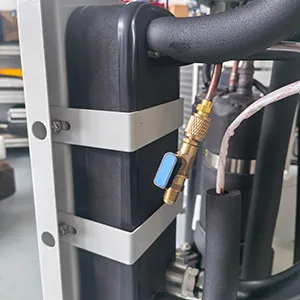
Evaporator
Absorbs heat from the cooling fluid as the refrigerant changes state, which lowers the temperature of the fluid in the chiller.
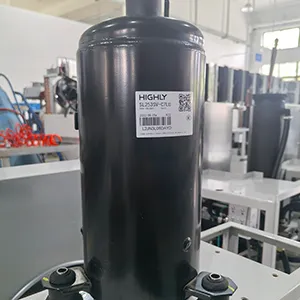
Compressor
Increases the pressure and temperature of the refrigerant gas so it can release heat effectively in the next stage.
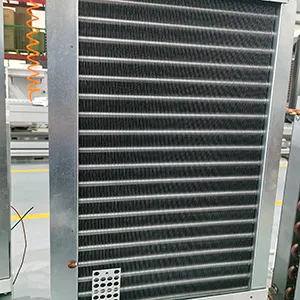
Condenser
High-pressure superheated refrigerant vapor from the compressor enters the condenser, releases all the heat absorbed during the cycle to the surrounding air, and then turns back into liquid.
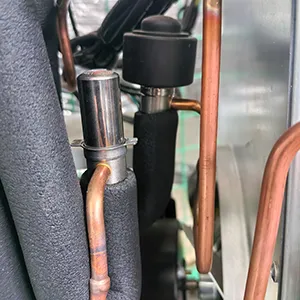
Expansion Valve
It reduces the pressure of the high-pressure, normal-temperature refrigerant liquid, turning it into a low-temperature mixture that enters the evaporator to absorb heat and complete the cooling cycle.
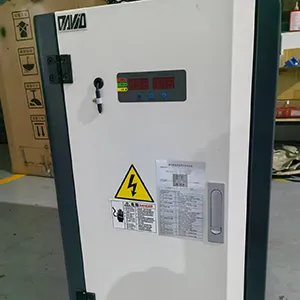
ON/OFF Control System
It provides direct cooling by circulating industrial oil to absorb heat from high-temperature areas of the equipment and reduces local heat buildup and temperature differences.
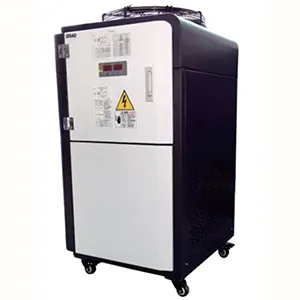
PID Control System
It adjusts machining temperature in real time to match ambient conditions, keeping it within ±0.5°C and reducing heat-related deformation and expansion.
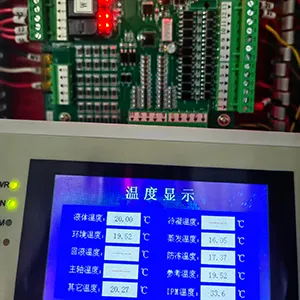
AC Variable Frequency Control System
It connects with a remote control center through MAX485 communication and enables precise temperature control with an accuracy of ±0.1°C.