
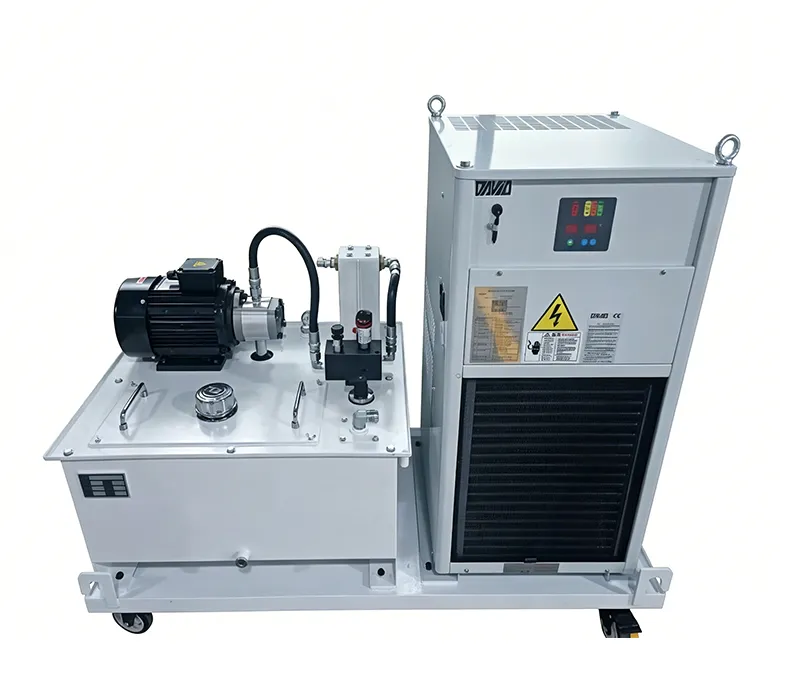
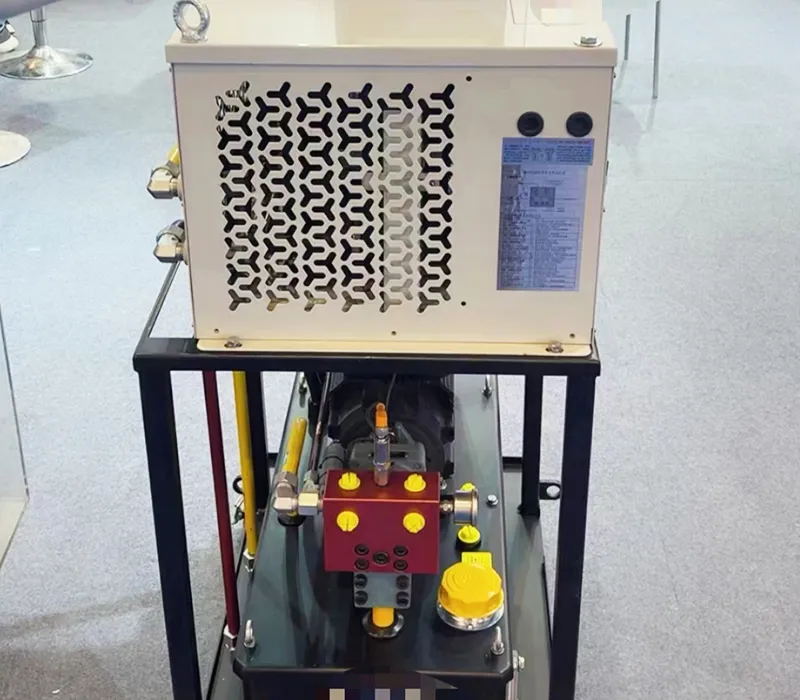
Hydraulic Press Chiller
Industrial Oil Chiller for Hydraulic Cooling
- Process Chiller Type: Oil medium, air-cooled chiller
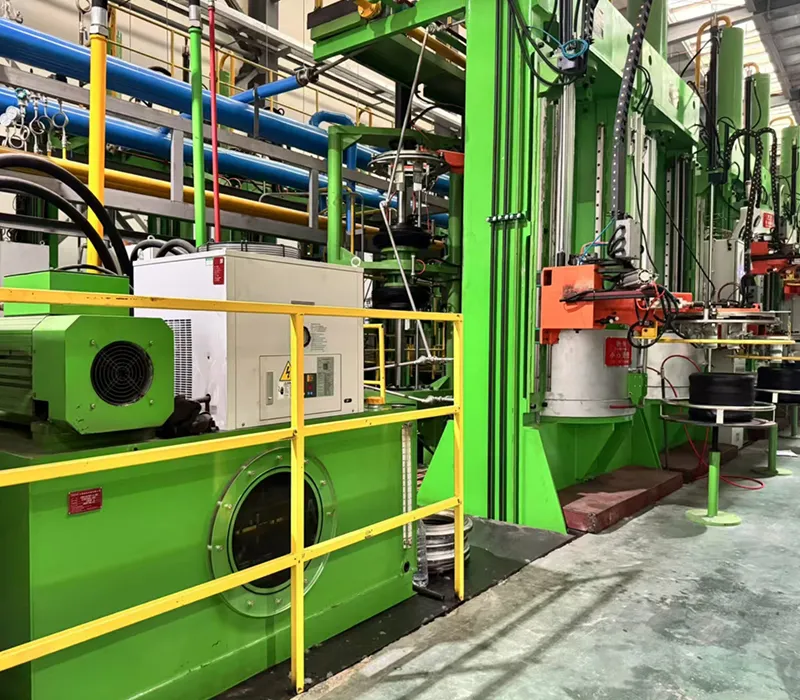
Hydraulic press chillers control the temperature of hydraulic oil by removing heat generated during system operation through an air-cooled heat exchange process. They keep oil conditions stable during continuous working cycles and prevent problems such as oil degradation, seal damage, and deformation of mechanical components caused by excessive heat. These industrial cooling systems are commonly used in hydraulic units for rubber vulcanizing machines, metal processing equipment such as grinders, hydraulic presses, punching machines, boring and milling machines, and other automated equipment that relies on stable hydraulic oil temperature.
Contact Us
Specifications
| Model | AO-20PS |
| Cooling Capacity (50hz) | 2000W |
| Power - Main Circuit | Three Phase AC 220V/380V 50Hz |
| Power - Control Circuit | Single Phase AC 26V 50Hz |
| Enclosure Paint | RAL-7035 |
| Dimension (L×W×H) | 555×440×1116mm |
| Compressor | WHP03200 |
| Evaporator | Cross-fin coil type |
| Condenser | Cross-fin coil type |
| Fan Blade | Propeller fan blade |
| Refrigerant Control | Capillary tube |
| Oil Temperature Control | Select one of the following two modes: Differential temperature control mode (adjustable range: -9.9°C to +9.9°C) Constant temperature control mode (inlet temperature setpoint range: 10°C to 40°C) |
| Protection Devices | Overcurrent protection Phase loss & phase reversal protection Restart prevention timer High oil temperature protection Low oil temperature protection |
| Refrigerant | R22 |
| Applicable Oil | Lubricating oil, spindle oil |
| Temperature Range (Room Temperature) | 10℃ to 45℃ |
| Temperature Range (Oil Inlet Temperature) | 10℃ to 40℃ |
| Connection Size (Oil Inlet) | G 3/4” |
| Connection Size (Oil Outlet) | G 3/4” |
| Weight | 90kg |
Features
- Hydraulic press chillers lower oil temperature through circulating cooling, maintain stable hydraulic oil viscosity, and reduce wear on hydraulic components.
- Their constant temperature control technology provides uniform high-pressure heat exchange, keeps the hydraulic unit at stable temperature and pressure, extends equipment service life, and reduces failure rate.