
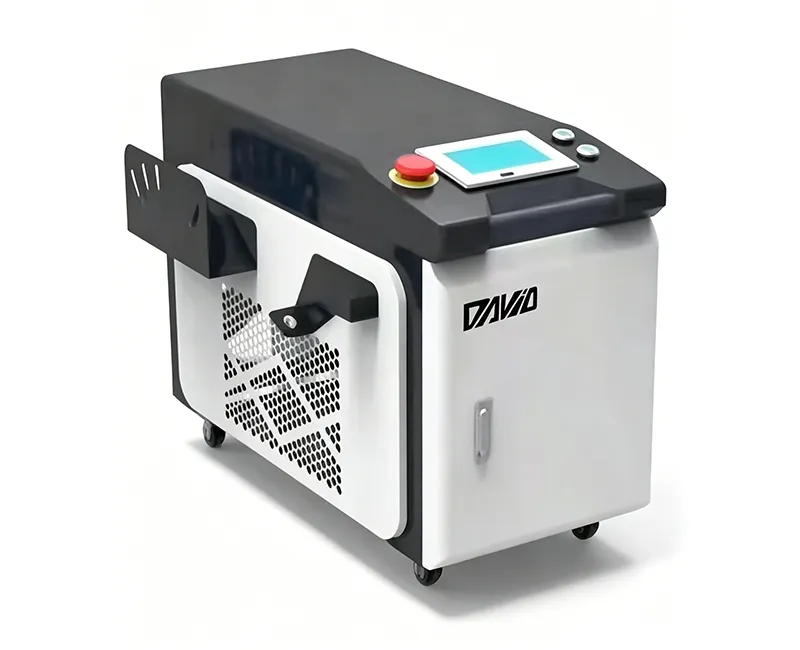
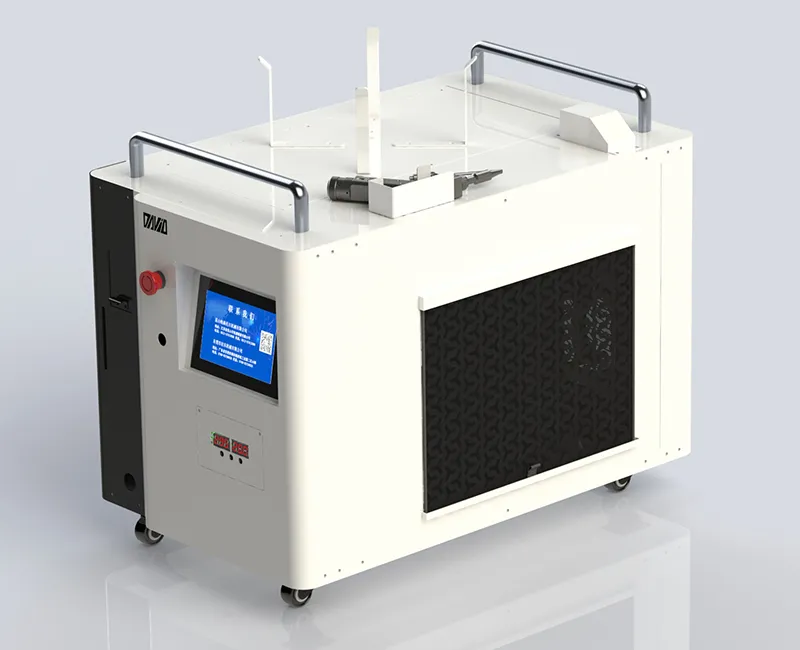
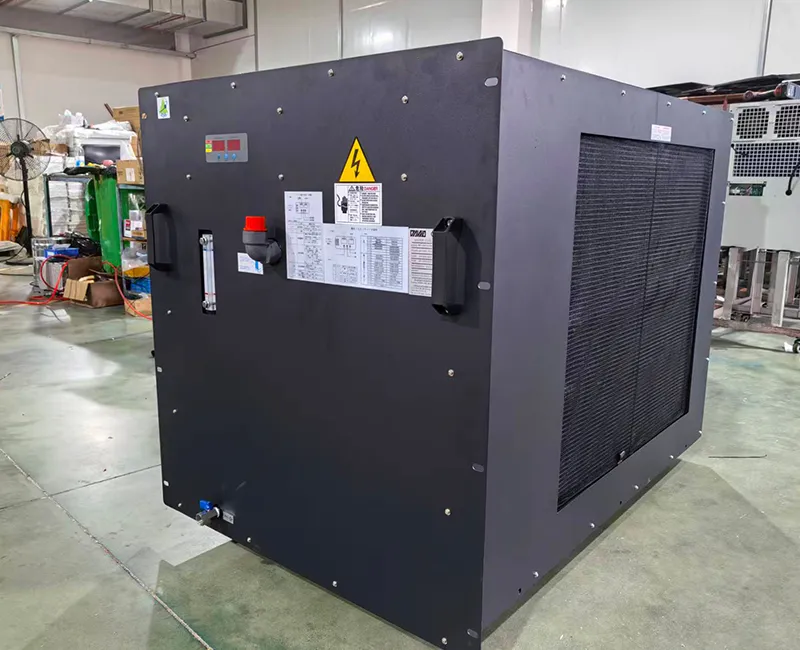
Laser Welding Machine Chiller
Portable Laser Welding Chiller
- Process Chiller Type: Water medium, air-cooled chiller
- Cooling Capacity: 1.0-6.0kW
Laser welding machine chillers provide water cooling for portable fiber laser welding machines during high-power operation. The cooling unit is integrated into the welding machine and uses water circulation to cool the laser source and welding head, so the laser equipment can run stably for long working periods. Unlike conventional split-type chillers, these portable laser welding chiller units are integrated directly into the handheld laser welding machine to create a more compact integrated design.
Contact Us
Specifications
| Model | |||||
| Power Supply | 220V/1P/50Hz | ||||
| Total Power | W | 2.6 | 2.8 | 3.6 | |
| Current | A | 7 | 9 | 12.5 | |
| Refrigerant | R22 | ||||
| Nominal Cooling Capacity | W | 2500 | 3500 | 5000 | |
| Btu/h | 8500 | 12000 | 17000 | ||
| Heating Power | W | 500~1500 | |||
| Water Tank Capacity | L | 20 | 45 | ||
| Low Temperature Water | Temperature Range | ℃ | 15-35 | ||
| Control Accuracy | ℃ | ±1.5(AWMH±.0.1~0.2) | |||
| Max. Flow Rate | L/min | 30~60 | |||
| Max. Pressure | Mpa | 0.42 | |||
| Connection Size | G 1/2” | ||||
| Normal Temperature Water | Temperature Range | ℃ | 15-35 | ||
| Control Accuracy | ℃ | ±1.5(AWMH±0.1~0.2) | |||
| Max. Flow Rate | L/min | 5 | |||
| Max. Pressure | Mpa | 0.42 | |||
| Connection Size | G 1/2” | ||||
| Weight | kg | 120 | 130 | 160 | |
| Dimensions | mm | 1170×640×1330 | |||